Nonprofit

Bankruptcy Counseling

Certified

Understand What Qualifies You for Bankruptcy

Bankruptcy can wipe out unsecured debt or restructure it into a plan you can actually afford, but it's not automatic relief. A means test decides whether you qualify for Chapter 7 bankruptcy or need to file Chapter 13 instead, and every consumer bankruptcy case starts with required credit counseling before you can file. Our counselors go through your income, debts, and creditors with you, explain what the bankruptcy code actually requires for Chapter 7, Chapter 11, or Chapter 13, and help you decide whether filing is the right move before you spend money on a filing fee you can't get back. Bankruptcy is one form of debt relief, and unlike a debt management plan or debt settlement, it goes through the courts and follows federal law rather than a negotiation with your creditors.

HUD-Approved Housing Counseling Agency

NFCC Member

501(c)(3) Nonprofit
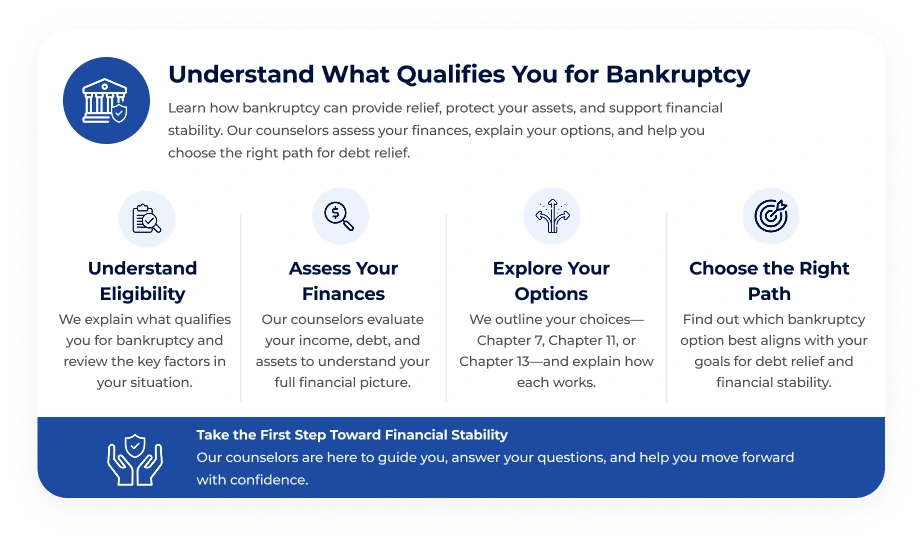
Bankruptcy counseling steps to assess eligibility, finances, and debt relief options.
Your options

What Bankruptcy Counseling Actually Covers

  • Bankruptcy counseling helps compare Chapter 7, 11, and 13 options.

    Understand Your Bankruptcy Options and What to Expect

    Learn about different bankruptcy options and gain a general understanding of how the bankruptcy process works. Explore important considerations that may help you better understand your financial situation and available options. Discover what to expect throughout the bankruptcy process and how financial education can help you prepare. Build the knowledge and confidence to ask informed questions and better understand the next steps in your financial journey.
  • Bankruptcy counseling helps protect essential assets and maintain financial stability.

    Understand Bankruptcy Exemptions and How They May Affect Your Assets

    Learn how bankruptcy may affect your assets and gain a general understanding of bankruptcy exemptions. This course introduces important concepts related to property and asset protection during the bankruptcy process. Explore key considerations that can help you better understand what to expect. Gain the knowledge and confidence to ask informed questions and make decisions about your financial future.
  • Bankruptcy counseling resources to rebuild credit and improve financial stability.

    Understand How to Rebuild Credit and Improve Financial Stability After Bankruptcy

    Learn how bankruptcy may affect your credit and gain a general understanding of the steps involved in rebuilding your financial future. Explore important concepts related to credit reports, credit scores, and responsible financial habits after bankruptcy. Discover how budgeting, managing debt, and making informed financial decisions can support long-term financial stability. Build the knowledge and confidence to take positive steps toward improving your credit and overall financial well-being.
Your journey

Step-by-Step
Bankruptcy Counseling Process

  • Step 01

    Start With a Bankruptcy Counseling Session to Explore Options

    Begin your bankruptcy counseling journey online with Credit.org’s Pre-Bankruptcy Credit Counseling course. This first step helps you review your income, expenses, debts, and overall budget to better understand your financial situation. You'll also learn about the bankruptcy process, explore potential debt relief options, and gain valuable financial knowledge to help you make informed decisions about your next steps.
  • Step 02

    Schedule Your One-on-One Bankruptcy Counseling Session to Review Your Budget and Options

    After completing the online Pre-Bankruptcy Credit Counseling course, the next step is to schedule your one-on-one counseling session with a certified credit counselor. During this session, you'll review your income, expenses, debts, and overall budget to better understand your financial situation. Your counselor will help you explore potential debt relief options, discuss important financial considerations, and provide educational guidance to help you make informed decisions about your next steps.
  • Step 03

    Complete Your Bankruptcy Counseling and Receive Your Certificate of Completion

    After completing your online Pre-Bankruptcy Credit Counseling course and required one-on-one counseling session, you'll receive your bankruptcy counseling certificate of completion. This certificate is required if you decide to move forward with filing for bankruptcy and must be included as part of the bankruptcy filing process, subject to applicable legal requirements. Completing these steps helps you better understand your financial situation, explore available options, and prepare for the next steps in your financial journey.
  • Step 04

    Complete Your Post-Bankruptcy Debtor Education Course for Discharge

    If you decide to move forward with filing for bankruptcy, you will generally be required to complete a Post-Bankruptcy Debtor Education course before receiving a bankruptcy discharge. This course provides financial education on budgeting, managing money, using credit responsibly, and building healthy financial habits. Once completed, you'll receive a Debtor Education Certificate of Completion, which must be filed with the bankruptcy court as required. This final educational step helps prepare you to rebuild your financial future and work toward long-term financial stability.
  • Wherever You Are on Your Journey, We're Here to Help

Tools & resources

Bankruptcy  
Tools Made to Help You

The bankruptcy process runs on paperwork and deadlines, and most of the mistakes we see when people are filing bankruptcy come from skipping a step, not from the law itself: your pre-filing counseling certificate, your means test numbers, your post-filing debtor education certificate, all required under the bankruptcy code. These tools help you get each one right, on time, so a paperwork mistake doesn't delay your discharge.

Pre-Filing Credit Counseling

Complete your required pre-filing credit counseling online, the certificate you must file with your bankruptcy petition. Our U.S. Trustee-approved course issues it for $45 per session.
Start Course

Pre-Discharge Debtor Education

Complete your required pre-discharge debtor education online. You won't receive your discharge without this certificate, and it's what finalizes your bankruptcy proceedings. Ours costs $35 per session.
Start Course

Financial Calculators

Compare bankruptcy scenarios, evaluate Chapter 7 vs. Chapter 13 impacts, and calculate debt payoff timelines before filing.
Calculator

Consumer Bankruptcy Resources

Download step-by-step guides, checklists, and worksheets to organize your bankruptcy forms and documents, prepare for filing, and track your progress.
Access
Understand Your Bankruptcy Options

Explore our free financial calculators to better understand your debt, compare potential debt relief options, including bankruptcy, and make informed decisions about your financial future.

Financial tools

Explore reverse mortgage estimates with guidance

Use our educational calculator to better understand how home value, available equity, interest rates, and loan costs may affect a reverse mortgage estimate. These numbers are examples only and should be reviewed with a certified housing counselor.

  • Smart Retirement Planning

    See how a reverse mortgage could impact your long-term financial security and provide extra cash flow when you need it most.
  • Clear Financial Insights

    Understand how much equity you can access and how it could supplement your retirement income.
  • Personalized Loan Estimates

    Get a tailored breakdown of potential loan amounts, interest rates, and repayment scenarios based on your home's value.
Explore Educational Calculator

Always Free

No Obligation

Confidential

For Educational Guidance

  • Estimated Home Value

    Based on market data
$425,000
Sample estimate - actual values vary

Estimated Available Equity

~$210,000

Estimated Monthly Payment Option

~$1,050

Interest Rate Range

6.5% - 7.2%
These are sample estimates for illustration only. Speak with a certified counselor for accurate figures based on your situation.
Want personalized guidance?

Speak with a certified housing counselor to review your situation, questions, and next steps.

Common questions

Bankruptcy FAQs

Answers to the most common questions about bankruptcy counseling.
Is Credit.org Approved by U.S. Trustees?

Yes. Credit.org is approved to issue Pre-filing Credit Counseling and Pre-discharge Debtor Education certificates in compliance with the bankruptcy code. Approval does not endorse or assure the quality of an agency's service.

Do I Need to See an Attorney Before My Session?

No. You're welcome to speak with a certified credit counselor at any point, before or after consulting an attorney.

How Soon Can I Schedule a Counseling Appointment?

You can skip the wait. Call us at 888-425-3453 during business hours and you'll speak with a certified counselor right away, no appointment needed.

How Long Is a Bankruptcy Counseling Session?

Most sessions take up to 60 minutes, depending on your situation, questions, and the info you provide. We'll guide you through every step.

What Documents Do I Need to Bring to My Bankruptcy Counseling Session?

Bring a list of all debts, recent pay stubs, tax returns, bank statements, and any legal notices you have received. Your counselor will guide you on additional documents needed for your specific situation.

Can I Complete Bankruptcy Counseling Online?

Yes, Credit.org offers convenient online bankruptcy counseling and debtor education courses. Our Pre-Bankruptcy Credit Counseling course begins online, followed by a required one-on-one session with a certified credit counselor to review your financial situation and explore potential options. Our Post-Bankruptcy Debtor Education course can be completed entirely online, with counselors available to answer questions or provide additional support whenever needed.

What Happens to My Creditors When I File for Bankruptcy?

Filing your bankruptcy petition triggers what the bankruptcy code calls an automatic stay, and it takes effect immediately, without a judge having to approve anything first. Once it's in place, creditors generally can't keep calling you, file or continue a lawsuit against you, or garnish your wages. The stay isn't unlimited, a few actions like certain child support proceedings aren't covered, and it can be lifted early in specific situations, but for most unsecured creditors it's the main reason people say bankruptcy finally gave them room to breathe.

Still have questions?

Speak with a certified counselor about your bankruptcy options.
Take the next step

Ready to take control of

your finances?

Unbiased, confidential counseling from certified experts.

Private & confidential

Educational guidance

HUD-approved agency

No sales pressure

50,000+
People helped yearly
Trusted guidance from certified housing counselors
50+
Years of experience
Helping homeowners make confident, informed decisions
4.9/5
Client satisfaction
Based on thousands of counseling sessions