

.svg)



Why checking a free credit report matters
A free credit report lets you see how your financial information is being shared. Reviewing it helps you catch errors, stay up to date, and spot signs of identity theft early. Checking your own credit is safe and does not hurt your credit.
If you want help learning the basics, Credit.org offers free education tools, including the Consumer Guide to Good Credit, available through its financial education guides and downloads.
What information is included in a credit report?
A credit report is a detailed record of your credit history. It shows your accounts, payment patterns, balances, and public records tied to your name. Lenders and insurance companies use this information when deciding whether to approve applications and what terms to offer.
Your credit report can affect real-world costs, including whether you qualify for a loan and how much your monthly mortgage payment may be. Reviewing it also helps you confirm that any hard inquiry listed is accurate.
For a clear walkthrough, Credit.org explains each section in its guide on how to read and interpret your credit report.
Which credit bureaus maintain consumer reports?
There are three nationwide credit bureaus that collect and maintain consumer data. These credit bureaus are Equifax, Experian, and TransUnion. Each credit reporting agency may show slightly different information because not all lenders report to all three.
You can find the bureaus directly at:
Together, these three credit bureaus form the core of the U.S. credit reporting system.
How to request your annual credit report safely
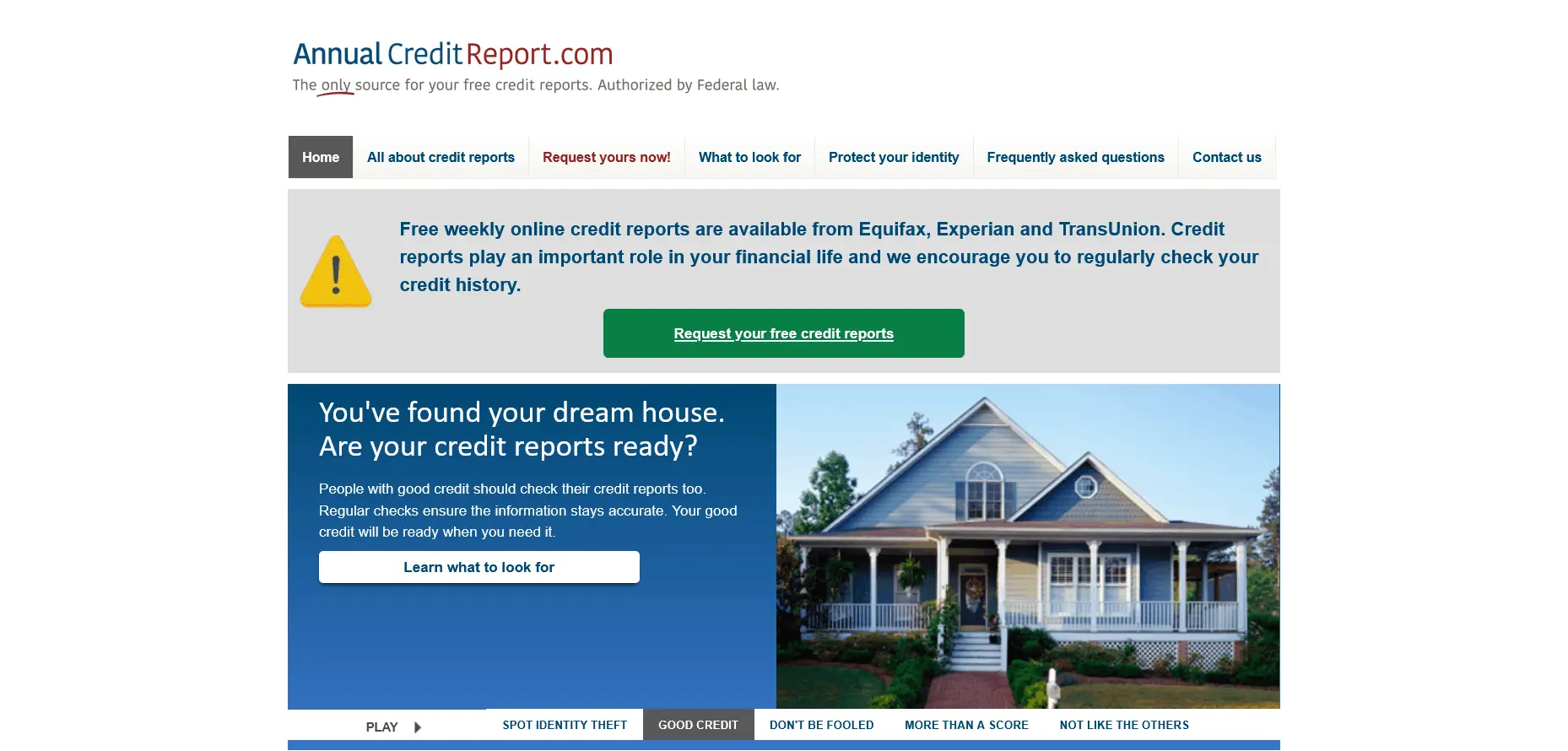
The official place to request your annual credit report is AnnualCreditReport.com. This credit report request service is authorized by federal law and allows you to request reports online, by phone, or by mail.
You can get a free copy from each bureau, resulting in three reports total. You will be asked for basic details, such as your Social Security number and the date of your request, to confirm your identity and grant access.
Note: be sure to verify you are on the correct site. Look for the secure padlock and "https://" at the beginning of the web site address. You want to be careful not to provide your SSN to an imposter site. Learn more about How to identify legitimate websites from Columbia University.
What does annual credit access look like today?
In addition to the traditional annual credit report request, consumers now have permanent access to free weekly online reports. The nationwide credit bureaus offer free credit reports through the same official request service, making it easier to monitor your credit file year-round.
Some people check weekly, while others review reports a few times a year. Either way, this expanded annual credit access helps consumers keep their information current and respond quickly to changes.
Can I get additional free credit reports beyond the annual limit?
You may qualify for additional free credit reports outside the standard schedule. Under federal law, consumers are eligible for extra reports if they were denied credit, are receiving public welfare assistance, or believe they are a victim of identity theft.
These situations allow you to request a free report when timing matters most, without waiting for the next annual credit cycle.
What is included in your credit file?
Your credit file is the full collection of data held by a credit reporting company about you. The Fair Credit Reporting Act gives you the right to access this file, dispute errors, and contact credit reporting agencies if information is inaccurate.
If you see incorrect account details or outdated data, you can file a dispute directly with the reporting agency. Keeping your credit file accurate helps protect your financial standing.
How to review and save a copy of your credit
When you receive a copy of your credit, review it carefully and store it securely. Compare reports from different bureaus, check each account, and note any missing or incorrect entries.
You can get a free copy multiple times per year, and keeping past reports makes it easier to track changes over time.
Other consumer reporting agencies that offer free reports
Beyond the three major credit bureaus, other credit reporting agencies maintain consumer data used by banks, landlords, and insurers. Many of these companies offer free reports upon request.
You can request reports from:
- ChexSystems for banking history
- TeleCheck for check-writing activity
- MIB for insurance-related information
- First Advantage for background screening data
- LexisNexis Consumer Disclosure for broader consumer files
These reports are separate from your credit report but can still influence financial decisions.
Quick questions people ask before requesting their reports
Does a free credit report include my credit score?
No. A free credit report does not automatically include a credit score. Scores are calculated separately, though some services may offer them alongside reports.
Should I request my score along with my report?
The bureaus will offer to sell you a VantageScore report when you request your free report. We recommend against taking advantage of this offer. There are other ways to get a free credit score, and the FICO score is more useful than the VantageScore to most consumers.
Will checking my own report cause a hard inquiry?
No. Accessing your own report does not create a hard inquiry and does not affect your credit.
Why should I review reports before applying for credit?
Reviewing reports ahead of time helps you correct errors before applying for loans, insurance, or housing, which can improve outcomes and reduce delays.
What if I need help understanding what I see?
If your report feels confusing, Credit.org offers professional support through its Credit Report Review service. A trained counselor can help you understand your reports and take steps to correct any inaccuracies.





.svg)
.svg)


