

.svg)


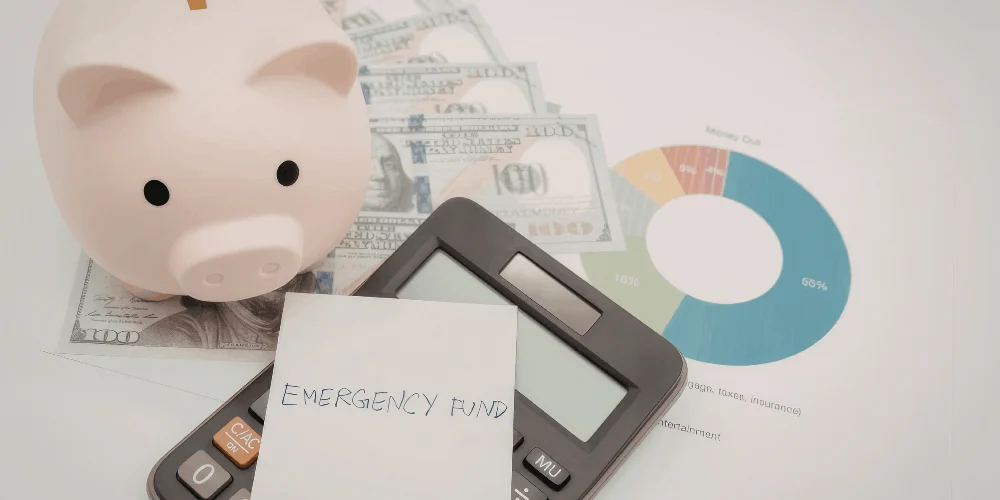
Emergency Savings Is What Protects You When Income Stops
When income drops or disappears, bills do not pause. Rent or mortgage payments still come due. Car repair bills show up without warning. A medical bill does not wait until next month. That is why emergency savings exist. They are not a bonus category in a budget. They are the barrier between a bad week and a financial collapse.
Most financial emergencies are predictable categories even if the timing is not: job loss, medical emergencies, housing costs, transportation breakdowns, unexpected expenses that land all at once. If you cannot cover essential expenses for even one month, you are exposed. Emergency savings protect your living expenses and buy time while you fix the problem.
The Consumer Financial Protection Bureau makes this clear in its guide to building an emergency fund. Cash reserves improve financial security because they absorb shocks before they turn into debt.
Why Most Emergency Fund Advice Fails Real Households
The most common advice is to save three to six months' of expenses. We’ve given that advice here before. It sounds responsible on paper. But when someone is already struggling, telling them to immediately build six months of reserves shuts them down.
The second bad strategy is worse: use credit cards for emergencies and pay them off later. With higher interest rates, that “temporary” solution becomes long-term debt. Interest compounds and minimum payments stretch for years. The possible loss spirals out of control.
The standard bad advice is based on a flawed premise: that emergency funds are a luxury goal you pursue after everything else is perfect. That is backward. Without an emergency fund, every setback turns into interest payments.
The Right Emergency Savings Fund Depends on Your Risk Profile
How much cash you need to set aside depends on risk, not a slogan. An emergency fund depends on how stable your income is, how high your fixed costs are, and how exposed you are to unexpected events.
If you are a single earner supporting a family, your target is higher. If your job is seasonal or commission-based, your emergency savings fund must account for uneven income. If your insurance deductible is $2,000, that number matters more than a generic rule.
America Saves puts it plainly in “It’s Not If, It’s When”. Emergencies are predictable in one sense: they will happen. The only variable is whether you planned for them.
Start Saving With a Non-Negotiable First Target: $500
Start saving with a hard floor of $500. Even a small amount like that prevents a car repair from going straight onto a credit card. It allows you to pay a medical bill without borrowing.
Do not argue with the number. Set aside $500. That is the first milestone. Once that money is saved, you shift toward a larger emergency fund target.
America Saves highlights this staged approach in “Your First $500”. If you cannot save that amount, you do not have a savings problem. You have a spending or income problem that must be addressed directly.
Use an Emergency Fund Calculator Before You Guess
Guessing leads to underfunding. An emergency fund calculator forces math into the conversation. Start with your monthly living expenses. Add rent or mortgage payments, utilities, insurance, food, transportation, and minimum debt payments. That total is your baseline.
Then factor in income stability and deductible exposure. If you want three months' worth of expenses, multiply. If you want six months' worth, multiply again. The calculator shows how much you must deposit each month to reach the goal within a realistic time frame.
Credit.org’s Savings Goals Calculator can help you build this into a structured savings plan. A clear financial plan removes emotion from the process. You stop guessing and start executing a savings strategy.
Where to Keep Your Emergency Savings Account So It Is Accessible
Your emergency savings account must be separate and easily accessible. Not invested in mutual funds. Not tied up in an individual retirement account. Not subject to early withdrawal penalties.
A basic savings account or money market account works. It should be FDIC insured at a bank or credit union. If you prefer a money market, confirm the money market account is also FDIC insured and not exposed to market volatility.
Do not mix it with your checking account. Keep a separate savings account dedicated to emergency funds. You want easy access, but not constant temptation. This is cash management, not growth investing.
Credit.org’s guide on how to manage your savings account effectively can help you understand how to save money toward all of your financial goals, including emergency savings.
Why a Credit Union Often Works Better Than Other Banks
Credit unions typically offer lower fees and better treatment for smaller balances than other banks. They are member-owned financial institutions. That means their incentives are very different from big national banks.
Some program banks advertise high rates but attach conditions or transfer limits. Read the fine print. Look at account fees. Evaluate how the bank handles overdrafts. The right bank account supports your plan. The wrong one erodes your savings through friction.
Here's a tip we've often given; look for a financial institution that offers custodial accounts for children. This is an important tool for personal finance education and we think it's essential. Any bank that refuses to help you establish cash management accounts to teach your children how banking works (and create lifelong customers in the process) should be avoided. Our experience teaches us that credit unions are more likely to offer this service than the big banks.

Do Not Invest Emergency Funds in Mutual Funds or an Individual Retirement Account
When the market drops 20 percent, it does not care that you need to fix your car that week. If your emergency money is sitting in mutual funds and the timing is bad, you sell at a loss. That turns a short-term problem into permanent damage.
I have seen people move emergency funds into investments because they wanted higher interest rates. Then the market dipped, they needed cash, and the account balance was lower than what they put in. That defeats the purpose of having emergency funds in the first place.
An individual retirement account creates a different problem. Accessing it early often triggers taxes and early withdrawal penalties. You lose a portion of your own money just to solve a short-term crisis. Retirement accounts and emergency savings solve different problems. When people blur that line, they usually regret it later.
A savings account, money market account, or other FDIC insured cash account does not offer dramatic growth. That is fine. Emergency savings are there to sit still, remain easily accessible, and be ready when the emergency arrives.
How to Build Emergency Savings When There Is No More Money
When someone says there is no more money to save, I take that seriously. But I also open the bank statements. The answer usually sits there in plain view.
Small recurring charges add up. Extra food spending, subscription creep, inconsistent budgeting, and casual spending that never gets reviewed. None of it feels large in isolation. Together, it often equals a few hundred dollars a month.
Start with your expenses, not your hopes. Track one full month. Identify what is essential and what is optional. Shift one or two categories. Even $25 per week redirected into emergency savings changes the trajectory. Over a year, that is real money saved.
Set up automatic transfers from your checking account into your emergency savings account the day after income hits. Do not wait to see what is left over. If you wait, there will be nothing left.
If income truly does not cover essential expenses, that is a separate problem that requires bigger change. In that case, cutting spending alone will not solve it. But in most households, tightening execution frees up enough cash to build a basic emergency fund.
For more, see Credit.org’s guide on starting an emergency fund to prevent debt.
Keep Your Emergency Fund Separate From Other Accounts
An emergency fund works best when it has boundaries. If your emergency money sits in the same savings account as vacation funds or home upgrades, it will get used for whatever feels urgent in the moment.
That is how emergency savings quietly disappear. A holiday trip. A furniture purchase. A “temporary” transfer you promise to replace.
Use a separate savings account dedicated only to emergency funds. Label it clearly. Keep it connected to your main bank account so transfers are possible, but not so blended that you forget its purpose.
You do not need anything too complicated. When financial emergencies hit, you want the funds ready and untouched by unrelated spending decisions.
Emergency Savings Is the Foundation of Financial Well Being
Emergency savings reduce panic, which leads to improved decisions. That is what financial well being looks like in real life. Without reserves, every setback increases stress, debt, and vulnerability. Emergency funds protect your ability to pay essential expenses, avoid high-interest debt, and maintain control during unexpected events.
If saving has been difficult before, start small and be disciplined. Pledge to save through Inland Empire Saves at IESaves.org or San Diego Saves at SDSaves.org. You'll get access to tools, guidance, and accountability to help you build and maintain an emergency savings fund that actually protects you.





.svg)
.svg)


