

.svg)


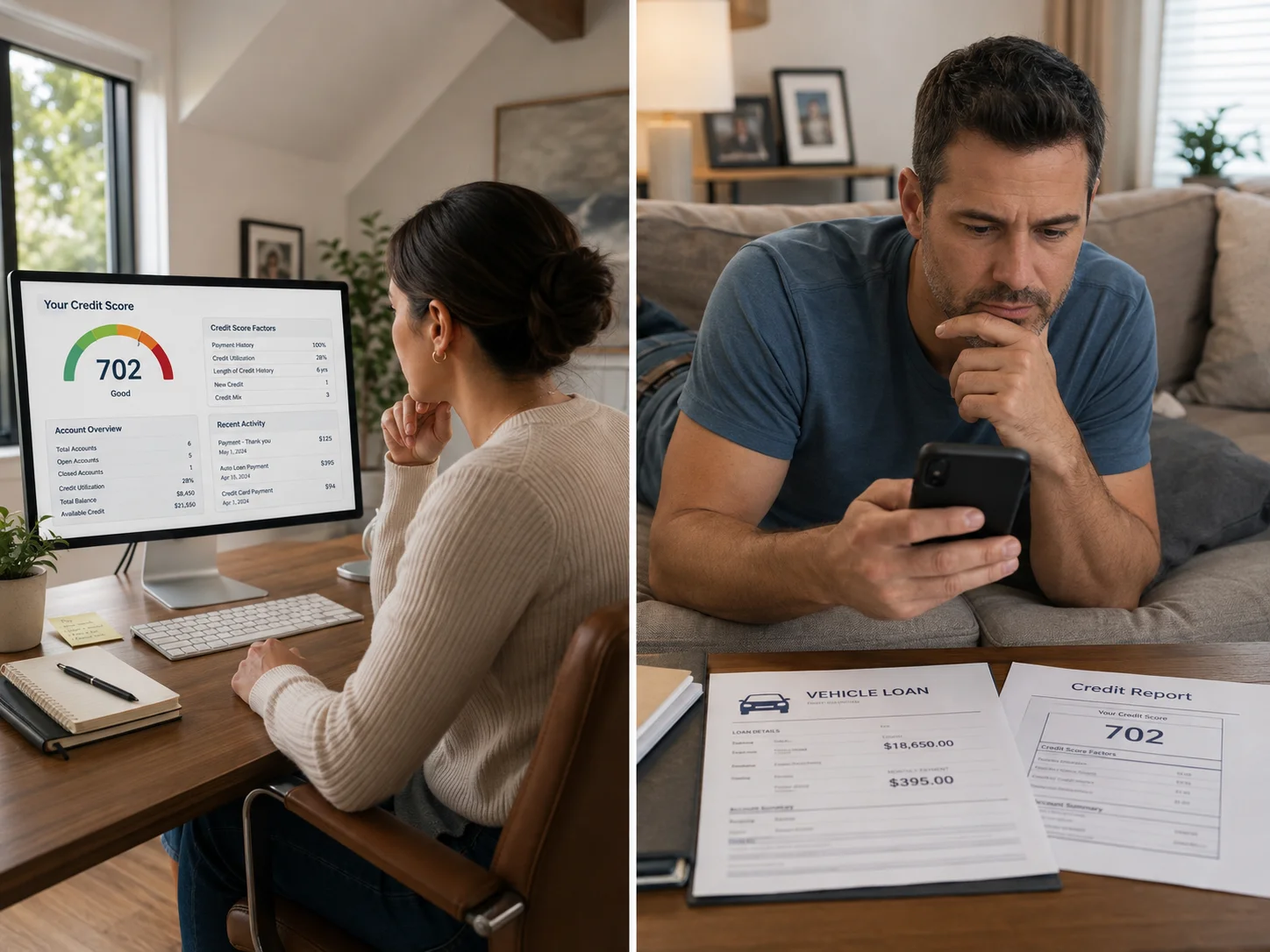
Divorce can end a marriage before it ends the financial connection between two people. Joint accounts, shared credit cards, car loans, and a mortgage can keep affecting your credit after divorce, even if your divorce agreement says one party must pay.
That is the part many people don't understand. A judge can decide legal responsibility between spouses, but creditors do not honor divorce decrees as a change to the original account agreement. If both you and your former spouse signed for a joint debt, the creditor can, and will, collect from either of you unless the creditor releases one person from the account.
Rebuilding credit after divorce starts with separating your financial life as soon as possible, staring with the accounts that still connect both names.
Does Divorce Affect Your Credit Score?
Divorce does not directly lower your credit score. Your marital status does not appear as a scoring factor in your FICO score, and getting divorced is not listed as a negative item on your credit report.
But divorce can have an indirect effect on credit. If shared debts are not paid, if joint credit cards stay open, or if one person runs up balances before the account is closed, both credit reports can be negatively affected.
Instead of asking whether divorce itself hurts your credit, look for the accounts that still tie you to your former spouse.
Start With Your Credit Report
Before you can rebuild credit after divorce, review your credit report from each of the three major credit bureaus: Equifax, Experian, and TransUnion. Federal law gives consumers access to free credit reports, and AnnualCreditReport.com is the official site for requesting them. The FTC also explains how to get free credit reports and avoid look-alike sites.
Review each divorce credit report for:
- Joint accounts
- Joint credit cards
- Car loans or personal loans with both names attached
- Shared accounts with late or missed payments
- Accounts where you are an authorized user
- New accounts you do not recognize
- Wrong balances, credit limits, or account status
- Signs of identity theft or misuse by a former spouse
If you find inaccurate information, dispute it with the credit reporting agencies. The CFPB explains how to dispute an error on your credit report, including contacting the credit bureau and the company that furnished the information.
How Your Credit History Can Stay Linked After Divorce
Your credit history is tied to the accounts in your own name and any accounts you shared. Joint credit accounts do not disappear just because the relationship ends.
If a joint account remains open, both people are still responsible for the debt. If the account has missed payments, late payments, high balances, or collection activity, that information appears on both spouses’ credit reports.
Late payments can remain on credit reports for seven years. That is a long time to carry damage from an account you thought your former spouse was handling.
This is why it is better to deal with joint finances during the divorce process, even when the communication is difficult. Putting it off will only make the problem more expensive. A shared card, missed car payment, unpaid utility bill, or ignored collection account will keep showing up long after the divorce is final.
Why Your Divorce Decree Does Not Protect Your Credit
A divorce decree can assign responsibility for debts incurred during the marriage. It may order one spouse to pay a credit card, car loan, or other joint debt.
The creditor is not a party to that order. If the original account says both spouses are responsible, the card issuer, lender, or debt collector can pursue both people unless the account is refinanced, paid off, closed, transferred, or otherwise changed with the creditor’s approval.
The divorce decree still matters, though. It may help you enforce responsibilities between you and your former spouse. Talk to a family law attorney about your specific circumstances. But do not assume the decree will stop collection calls, protect your credit rating, or remove the account from your credit report.
For credit purposes, the account agreement matters.
Review and Separate Credit Accounts
One of the first steps in rebuilding credit after divorce is separating previously shared credit accounts. Do this during the divorce, not months later.
Start with these steps:
- Make a list of all financial accounts, including credit cards, loans, bank accounts, and lines of credit.
- Identify which accounts are joint, individual, or authorized user accounts.
- Contact each creditor to ask what options exist for account closure, balance transfer, refinance, or removal.
- Close joint credit cards when it is safe to do so.
- Remove your former spouse as an authorized user from your credit card if needed.
- Ask to be removed as an authorized user from accounts you no longer use or control.
- Keep written records of account changes, payments, and creditor conversations.
If your spouse is only an authorized user, you may be able to request removal from the account. If the account is joint, removal may be harder. The creditor may require the balance to be paid, transferred, or refinanced before one person can be released.
This is also a good time to read Credit.org’s guidance on buying a home together before marriage, because many of the same risks apply when two people share debt or property without a clean exit plan.
Make a Repayment Plan for Joint Debt
If you still have joint debt after divorce, make a clear repayment plan. Do not rely on verbal promises.
A good plan should name:
- Which debts are joint
- Who will make each payment
- The due date for each account
- How proof of payment will be shared
- What happens if one person cannot pay
- Whether the debt will be paid off, refinanced, or transferred
Even if your divorce agreement says one party must pay, protect yourself by monitoring the account until your name is no longer attached. If a minimum payment is missed, your credit can be damaged too.
When you and your former spouse can still discuss money, use that window to settle the accounts. When that is not safe or realistic, route the conversation through your attorney, mediator, or another appropriate professional.
Watch Your Credit Utilization After Closing Joint Credit Cards
Closing joint credit cards can be necessary, but it will also affect your credit utilization ratio. Credit utilization compares your credit card balances with your total credit limits.
For example, if you have $3,000 in credit card debt and $10,000 in available credit, your utilization is 30%. If a joint card with a $5,000 limit is closed, your available credit drops, and your utilization rises.
FICO explains that payment history and amounts owed are major factors in credit scoring, and credit utilization is part of the amounts owed category. A common goal is to keep credit utilization under 30%, though lower is often better.
Do not keep an unsafe joint credit card open just to protect your score. Understand the tradeoff, then close or separate the account before it creates a bigger problem. Closing joint accounts is probably the right move, even if your score dips for a while, because it will prevent greater credit damage later.
Build Credit in Your Own Name
After divorce, you need to establish your own credit history. This matters most if there were accounts in your spouse’s name or if you were mainly an authorized user.
Ways to build credit after divorce include:
- Opening one credit card in your own name
- Using a secured credit card if you do not qualify for a regular card
- Paying every bill on time
- Keeping balances low
- Avoiding multiple new credit accounts at once
- Keeping older individual accounts open
- Monitoring your credit report regularly
A secured credit card can help build credit history because you make a deposit that usually becomes your credit limit. Use the secured card for small purchases, then pay it off on time. You’re building a record of steady payments, not another balance to carry.
If you are trying to understand how debt in a relationship can affect future finances, Credit.org’s article on marrying into debt is also useful.
Pay Bills on Time and Automate What You Can
Payment history is the most significant factor in credit scoring. Late payments, especially on joint accounts, can do lasting damage.
After divorce, your monthly income, household costs, and financial habits will all change at once. Build a new budget based on your new life, not the budget you had during the marriage.
To avoid missed payments:
- Set up automatic payments for at least the minimum payment.
- Create calendar reminders before due dates.
- Keep a small buffer in your checking account.
- Review statements every month.
- Contact creditors early if you cannot pay.
Automating payments helps avoid late fees and late payments, but do not set autopay and stop watching the account. You still need to make sure the money is available and the payment posts correctly.
Add a Statement Only When It Helps Explain Your Credit Picture
Some people want to explain divorce-related credit problems directly on their credit report. You can add a short personal statement to your credit file, but it will not remove accurate negative information or change your credit score.
A statement explains your financial picture to someone manually reviewing your report. It is not a substitute for disputing errors, paying bills, or separating accounts. Credit.org explains when and how to consider adding a 100-word statement to your credit report.
Get Professional Help With Finances and Divorce
Most people do not complete a divorce without legal help. The money side deserves the same kind of attention.
A family law attorney can explain your legal rights and responsibilities. A financial planner can help with long-term planning, retirement accounts, and household cash flow. A nonprofit credit counselor can help you review your debts, budget, credit report, and repayment options.
If housing is part of the divorce, such as a mortgage, foreclosure risk, rental issue, or homebuying plan, talk to a HUD-approved housing counselor. If you and your spouse are divorcing without attorneys and can still discuss money in the same room, a counseling session helps you sort out practical next steps before credit damage happens.
If unsecured debt has become hard to manage, read Credit.org’s guide on when to consider debt counseling.
Credit After Divorce Starts With the Accounts
Credit recovery starts with the accounts still carrying both names. Once those are closed, transferred, refinanced, or monitored, the rest of the work gets simpler.
Start here:
- Pull your credit reports from the major credit bureaus.
- Identify joint accounts and shared debts.
- Close, transfer, refinance, or separate joint accounts.
- Make a written repayment plan for any joint debt that remains.
- Monitor your credit report during and after divorce.
- Build credit in your own name with careful, limited new credit.
- Get help before missed payments turn into collections.
If debt is making it hard to move forward, Credit.org can help you review your options. Start with debt relief and counseling services to get a clearer plan for your credit, payments, and next financial step.





.svg)
.svg)


